
Deer Park Previous Resident Sources
One address can leave several kinds of dated evidence, and each source answers a narrower question. The Harris County Clerk index follows recorded instruments, not every person who lived at a site. Library and archive materials can supply a historical name or address lead, but a regional directory is not a complete municipal roster. Begin with a stable parcel description, then choose the source whose date range fits the question.
| Source | Years It Covers | Where Held | What It Shows |
|---|---|---|---|
| Harris County Clerk real-property images | November 1, 1960 forward online | County Clerk Real Property portal | Recorded grantor, grantee, instrument and legal-description trail. |
| Harris County historical records | 1836 through the late 1950s, as described by the Clerk | Historical research office, warehouse, books, and microfilm | Older land, plat, probate, marriage, and related county records. |
| Regional city-directory sample | 1967 sample inspected | UNT Portal to Texas History | A dated name, spouse reference, address, telephone, and affiliation line. |
| TSLAC Deer Park map index | 1939, 1952, 1961, 1972, 1983, 1989, and post-1980 items | Texas State Library and Archives Commission index | Dated roads, features, and geographic context. |
| Deer Park Broadcaster database | 2007 to 2020 | Deer Park Library databases | Newspaper notices and historical-name leads. |
Use the current HCAD account and legal description first when the address is known. Move to the Clerk when ownership or an instrument date matters. For a pre-1960 question, skip the expectation that every record image will be online and use the Clerk's historical-research route or the Harris County archival guide instead.
Deer Park Previous Residents and Deed Images
The Harris County Clerk Real Property search indexes recorded instruments by file number, film code, date range, grantor, grantee, trustee, subdivision or description, instrument type, and legal-description components such as lot, block, unit, abstract, outlot, tract, and reserve. Search the legal description from HCAD when a street address has changed form or returns too many matches.
Online images begin November 1, 1960. The Clerk says public watermarked images are available after registration, while non-certified and certified copies can be ordered through the cart or requested in person or by mail. Information online is not guaranteed complete, and redactions apply. A recorder index is an evidence trail, not a final title opinion.
Harris County Clerk Public Records describes historical records, research access, and copy routes for material beyond the web index.
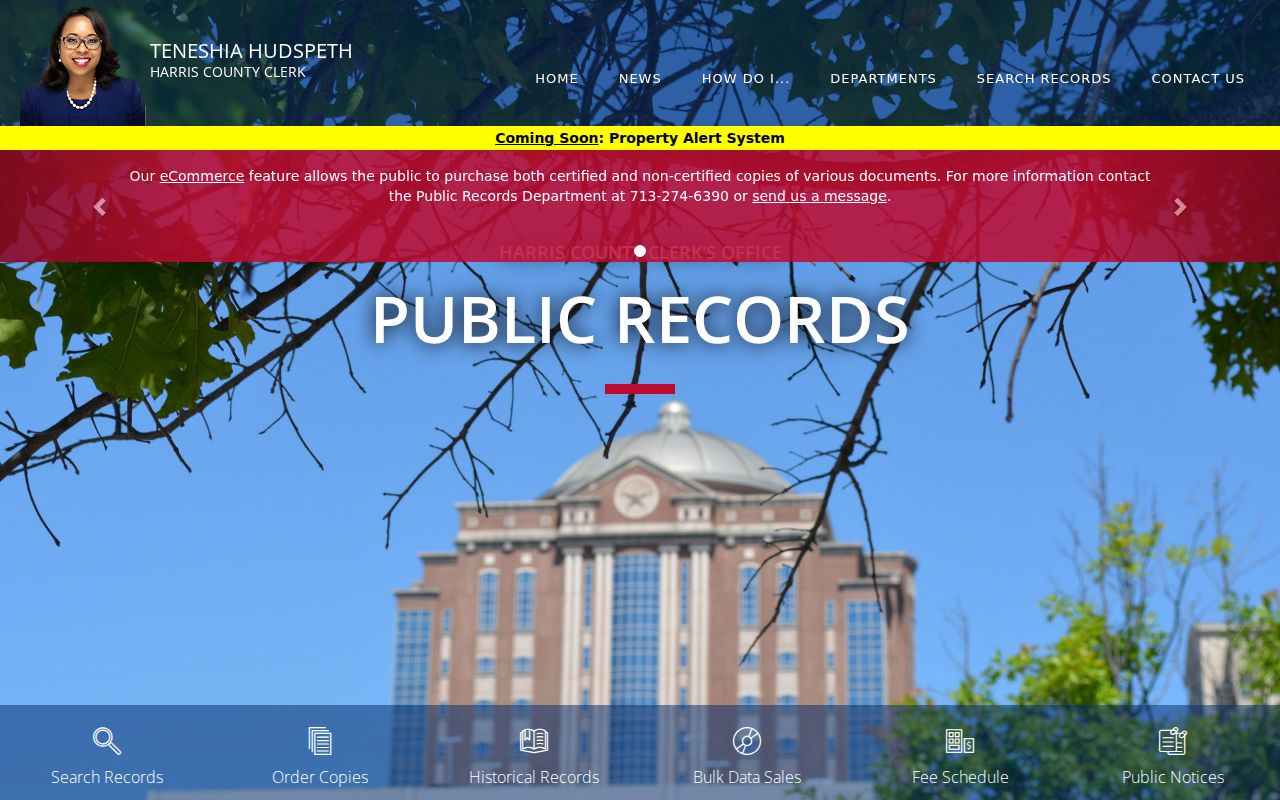
The historical-records route is the necessary handoff when the desired document predates the Clerk's online image coverage.
Trace Deer Park Previous Residents by Deed
A deed chain is a backward sequence of recorded transfers. It can identify past owners, but it cannot by itself establish every past occupant. HCAD is useful at the front of the process because it provides the current site address, account, subdivision, block and lot, and legal description. HCAD itself warns that it is not a title company, so treat the current owner field as a lead to the recorded deed.
- Find the modern Deer Park parcel in HCAD and copy the account, current situs address, subdivision, block, lot, and full legal description.
- Search the current owner as grantee in the County Clerk index, then use the legal description and approximate date to distinguish similar names.
- Read the image for the grantor, grantee, recording date, legal description, and references to prior instruments.
- Search the earlier seller as a grantee to locate that person's earlier acquisition, and repeat the sequence back through the available index.
- When the chain reaches the online-image boundary, take the file, film, volume, page, and legal-description notes to the warehouse, books, microfilm, or TSLAC route.
- Grantor and grantee
- The grantor conveys an interest in a recorded instrument; the grantee receives it.
- Chain of title
- A chain of title is the sequence of recorded transfers and related instruments connected to one parcel.
- Legal description
- A legal description identifies land through subdivision, lot, block, survey, or other recorded terms. It usually remains more useful than a street label in older records.
Note: Preserve each document's original street wording beside a modern address form, rather than assuming an old label has a one-to-one modern match.
Deer Park Previous Residents Before 1960
Harris County's historical-record material describes warehouse records from 1836 through the late 1950s, including land, plats, maps, county court and probate material, marriage, birth and death records, and military discharges. The research office is a different access channel from the online real-property screen. Its listed hours are 8:00 a.m. to 4:30 p.m., and the county page identifies multiple research locations and annexes. Confirm the current location and access conditions before a visit.
The TSLAC Harris County guide is a companion route for older county land and deed work. It identifies Deed Record 1837 to 1886 and related indexes among Harris holdings. Record the source, volume, page, and date for every lead. A blank web result is not proof that an earlier instrument does not exist.
Deer Park Previous Residents Museum Leads
The City of Deer Park's Museum Cabinets material identifies original deeds, surveys, early-family items, and eight Simeon West letters among city, library, and museum displays. These are local-history leads, not a searchable address index. A displayed deed or survey should be tied back to its date, legal description, and holding location before it is used in an address timeline.
City history places the Deer Park plat and founding in December 1892, while the early-history material connects the settlement to original land surveys and early landholders. That context can explain why an early property trail uses a survey, a rail-stop reference, or another land description instead of a familiar street name. It does not establish a household at a particular site.
Use the museum materials alongside the County Clerk chain and dated maps. The separate sources complement one another: one may provide local context, while the recorded instrument supplies the transfer and legal-description evidence.
1967 Deer Park Previous Residents Evidence
A regional directory can preserve a useful address snapshot without being a dedicated Deer Park directory. The inspected 1967 Baytown volume on the UNT Portal to Texas History includes a line for Paul Stewart, with Gail in parentheses, a Deer Park High School affiliation, the home marker, 1511 S Pruett, and telephone 4582-6088. This is dated, page-level evidence from a regional publication, not a claim about a current household.
Read a directory's introduction and abbreviation key before drawing conclusions. Names can repeat, spouse references can be abbreviated, telephone exchanges can be local, and an address may use the convention selected by that publication. The page image is more reliable than an OCR fragment, so preserve both the volume and page number when using it as a lead.
Texas State Library and Archives Commission's city-directory guide explains the types of names, addresses, telephones, spouse references, and household annotations directories can contain.
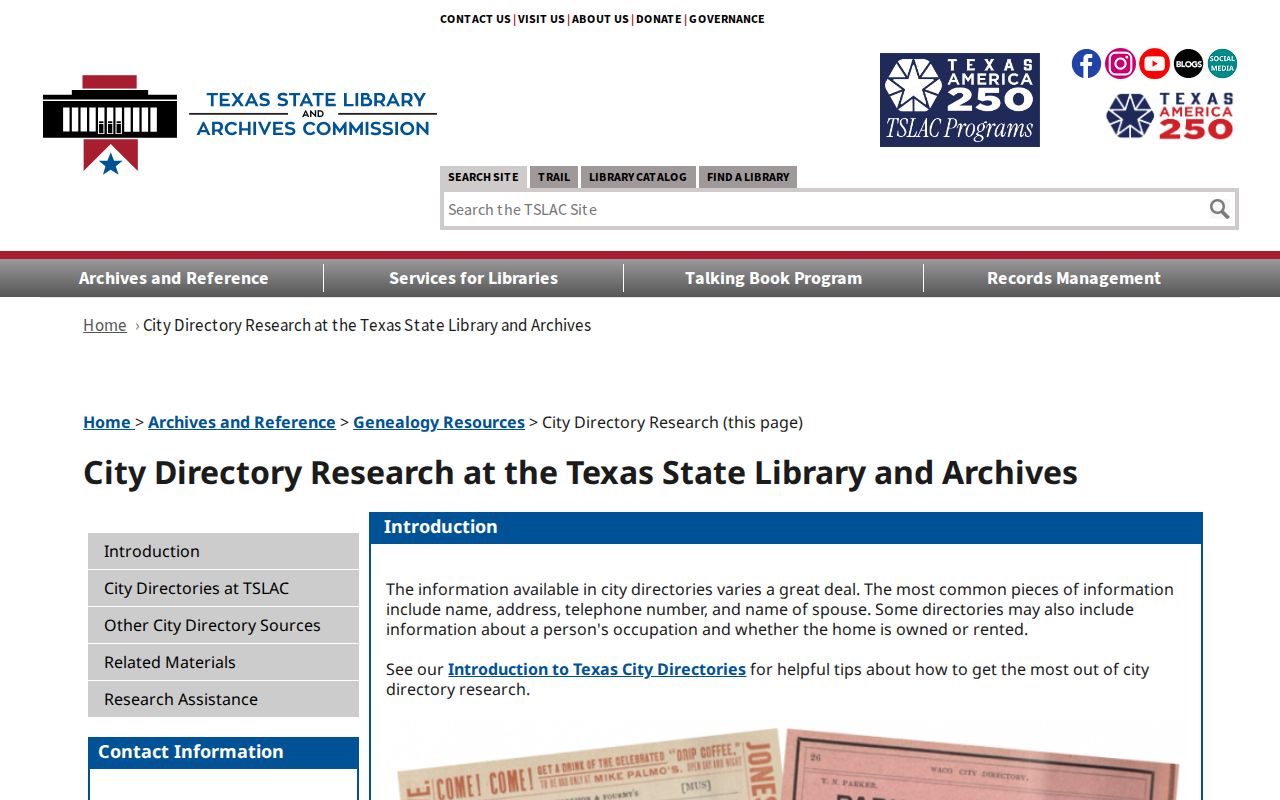
The TSLAC guide also directs researchers to repositories and subscription-dependent collections rather than promising a complete Deer Park directory run.
Deer Park Previous Residents Maps
Maps help reconcile a parcel's place in time. TSLAC's Deer Park subject index lists items for 1939, 1952, 1961, 1972, 1983, 1989, and post-1980. Compare a dated item with the city map book and current GIS, then return to the deed's subdivision and legal description. A map can show roads, railroads, schools, cemeteries, or land use. It does not identify who lived in a building.
City history identifies Luella, P Street, and X Street as original surviving names, and records West Avenue becoming Center Street. No authoritative Deer Park street-number renumbering schedule was located. Keep the old spelling and number as recorded, and do not manufacture a conversion. The city's 1892 plat history and early land-survey context can help interpret a deed that predates a modern street grid.
Note: A historic map line is not a legal survey, so compare it with current parcel geometry and the recorded legal description.
Deer Park Past Residents Archive Checks
When a deed and a directory point to the same era, use a third dated source as a check rather than treating a single mention as final. Deer Park Library lists Newspapers.com Texas Edition, NewsBank's Deer Park Broadcaster coverage, Texas Digital Sanborn Maps, HeritageQuest, and Ancestry Library Edition. Some routes require a library account, staff assistance, or in-library access. Confirm the access condition and preserve the source date with every result.
The Clayton and Deer Park Historical Society offers albums, yearbooks, family photographs, early-business material, and school or community records. Its collections can provide names, captions, and time-specific community context. They do not replace a recorded deed, vital certificate, or property account. For an obituary lead, compare the newspaper page image with a permitted official or probate record before recording a relationship.
Note: A dated archive reference can strengthen a historical timeline, but it should never be presented as proof of a current address.
Deer Park Past Residents and Household Clues
Property ownership is only one layer in research about who lived here before. No verified Deer Park reverse or criss-cross directory run was located in the reviewed sources. Ask Deer Park Library, TSLAC, UNT, or the Briscoe Center about a particular year and whether it has a street-address or telephone index. The library's databases include newspaper, genealogy, Texas Digital Sanborn, HeritageQuest, and in-library Ancestry access, but the public page does not promise a complete local run.
Pair sources by date rather than forcing them to agree. Find a dated directory or newspaper lead, inspect the page image, compare the address with the deed-chain date and a relevant map, then check whether the library's HeritageQuest route has a relevant census image for that period. The reviewed material confirms the access route but does not enumerate a Deer Park census run, so preserve the exact database result and date. Seek an appropriate permitted vital or probate record if a relationship needs confirmation. The historical volumes themselves have additional context in the Deer Park city directory.