
Finding Deer Park Resident Records
No single public roll identifies every person at every Deer Park address. A property card can identify an owner or mailing address. A recorded deed can place a grantor or grantee in a dated land transaction. A city directory, newspaper, or yearbook can supply a dated household lead. Each answers a narrower question, which is why the most reliable Deer Park residents directory search begins by choosing the record class instead of running a broad name query.
Use a full name, a middle initial, a street address, a date, or a parcel account whenever one is available. A result based on a name alone is only a lead. The City of Deer Park is within Harris County, so city materials and county materials often belong in the same search trail.
- Start with the Harris County property search when the address or owner name is known.
- Compare the parcel with the Deer Park GIS layer and city-limits map.
- Use the County Clerk real-property index for deeds, liens, and legal descriptions.
- Check dated election or library sources when the question is about a particular time.
- Request an existing record from the custodian when the online index does not cover it.
Note: A blank online result can reflect an old record, a protected record, a spelling difference, or a portal limit.
Deer Park Residents Records Offices
Records that help identify a Deer Park resident are held by separate offices. The City Secretary manages municipal records, the Harris County Appraisal District maintains appraisal data, and the Harris County Clerk holds recorded real-property instruments. Harris County Elections keeps election materials subject to Texas limits. Their files describe different roles, so an owner, voter, permit applicant, and deed party should never be silently treated as the same person.
Deer Park City Secretary
710 E San Augustine Street
Deer Park, TX 77536
281-478-7247
Harris County Appraisal District
Countywide appraisal and parcel records
Harris County, TX
Property search online
For city-held material, the Deer Park Open Records route requires a written request and directs it to the responsible department. Texas Government Code Chapter 552 requires access to public information subject to exceptions, but it does not require an agency to create a new list of residents.
Deer Park Property Roll Search Fields
HCAD is the main current parcel entry for a Deer Park residents directory search by address or owner. Its advanced form is designed to narrow property records, not to certify title or produce a household roster. Begin with a street name and ZIP, then add a range or legal description only when needed. HCAD says its data refreshes nightly, though map and system changes can take longer to appear.
| HCAD field | Useful Deer Park search |
|---|---|
| Owner Name | Partial surname plus first initial or name |
| Property Street Name | Street text with alternate forms when needed |
| Beginning and Ending Number | A bounded address range |
| ZIP Code | Five-digit postal filter |
| Legal Description | Subdivision, block, or related terms |
| Key Map or Map Facet | Additional geographic narrowing when a result set is large |
The HCAD advanced property form shows these controls. Its help also recommends partial street names and alternate numbered or street-word forms. A site address and mailing address can differ.
HCAD’s advanced-search page shows the address, owner, legal-description, ZIP, and range options used in this Deer Park residents directory workflow.
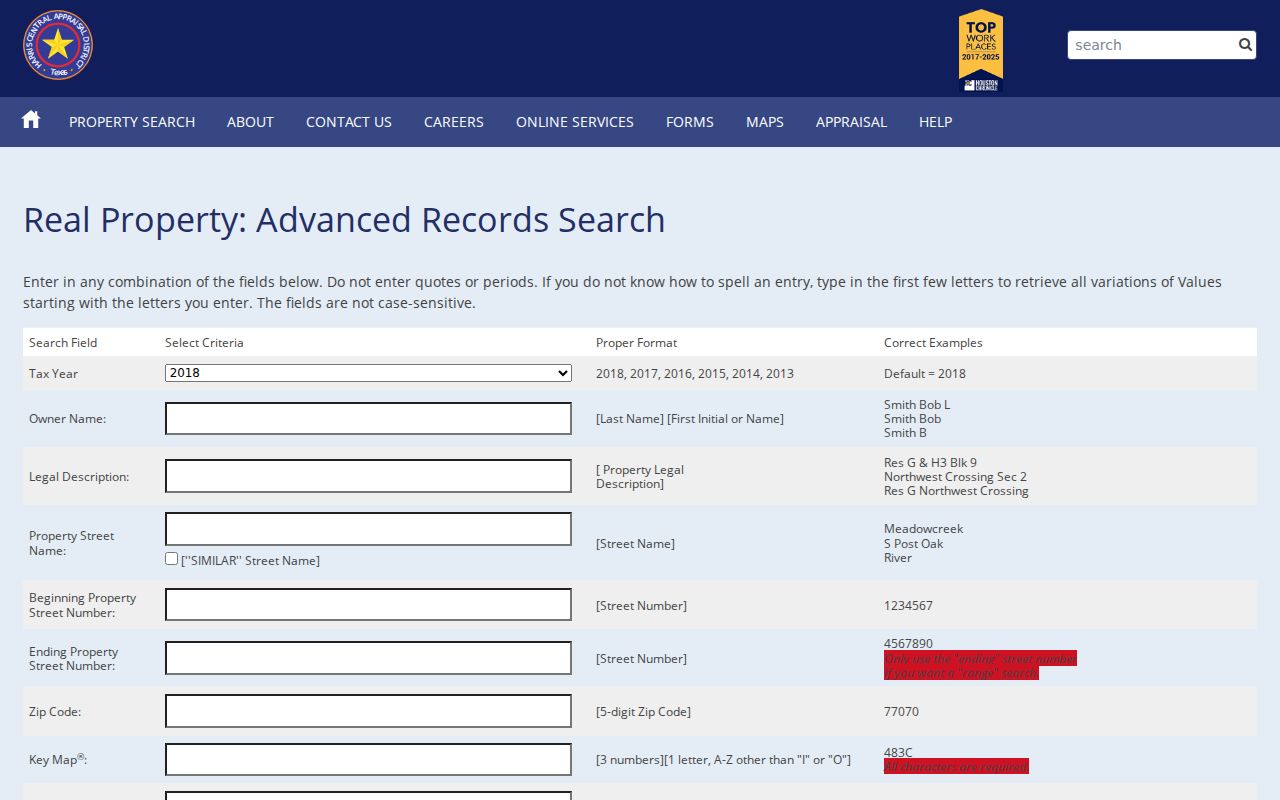
The form is a practical way to narrow a parcel set, but the recorded instrument remains the stronger source for a chain of title.
- Parcel
- A mapped unit of property tied to an account and legal description.
- Situs address
- The property’s physical site address, which may differ from its mailing address.
- Index
- A search list that points to a record; it is not always the record image itself.
- Resident roll
- A dated source that may associate a person with an address or civic record, not a universal household list.
Deer Park Parcel Maps and Boundaries
The Deer Park GIS parcel layer adds map context to an HCAD result. Its published fields include account, site address, site city, site ZIP, subdivision, improvement year, areas, values, precinct, and geometry. Those fields can connect a parcel card to a map and a legal description. They cannot prove every person who lives there.
Postal labels and city limits are separate checks. Deer Park’s primary postal ZIP is 77536. Nearby 77571 uses a La Porte postal label, so an address near the municipal edge should be checked against the city-limits layer rather than called Deer Park solely from a ZIP result.
Use the Deer Park parcel service with the city-limits service. The city describes Highway 225 to the north and Underwood Road to the east as broad orientation cues, not a substitute for a parcel-level map check.
Current Deer Park Residents Directories
Current directory-like records in Deer Park are role-specific. Property data describes appraisal accounts and ownership fields. Election material is dated and subject to statutory restrictions. A deed index lists parties to recorded instruments. The municipal staff directory is a work-contact tool, not a resident index. Treat each source as evidence of the role and date it actually records.
| Deer Park source | Recorded role | Custodian | Access path |
|---|---|---|---|
| HCAD appraisal account | Owner, mailing, and site fields | HCAD | Public search and data route |
| Parcel map layer | Address, geometry, ZIP, subdivision | City GIS | Public service layer |
| Recorded instrument index | Grantor, grantee, legal interest | Harris County Clerk | Web index and copies |
| Election rosters | Election-specific participation material | Harris County Elections | Roster archive or lawful request |
| City staff directory | Department work contacts | City of Deer Park | Public municipal directory |
When a name must be verified across several systems, use the focused Deer Park resident lookup workflow. Keep the exact record date beside each match, especially where an address may have changed.
Deer Park Voter Roster Dates
HarrisVotes publishes election rosters and archives, while the Harris County Tax Assessor-Collector provides the county voter-status route. A roster should be read with its election date and status. Early-voting rosters can be unofficial until reconciliation, and a dated election record does not establish a person’s present address.
Texas Election Code Section 13.004 restricts telephone numbers, Social Security numbers, Texas driver-license or identification numbers, and certain protected addresses. The county also provides a written website-removal form, but its effect is limited to the county website and does not erase records held by other custodians.
HarrisVotes election rosters show the dated archive route that can support, but not replace, a careful Deer Park residents directory match.
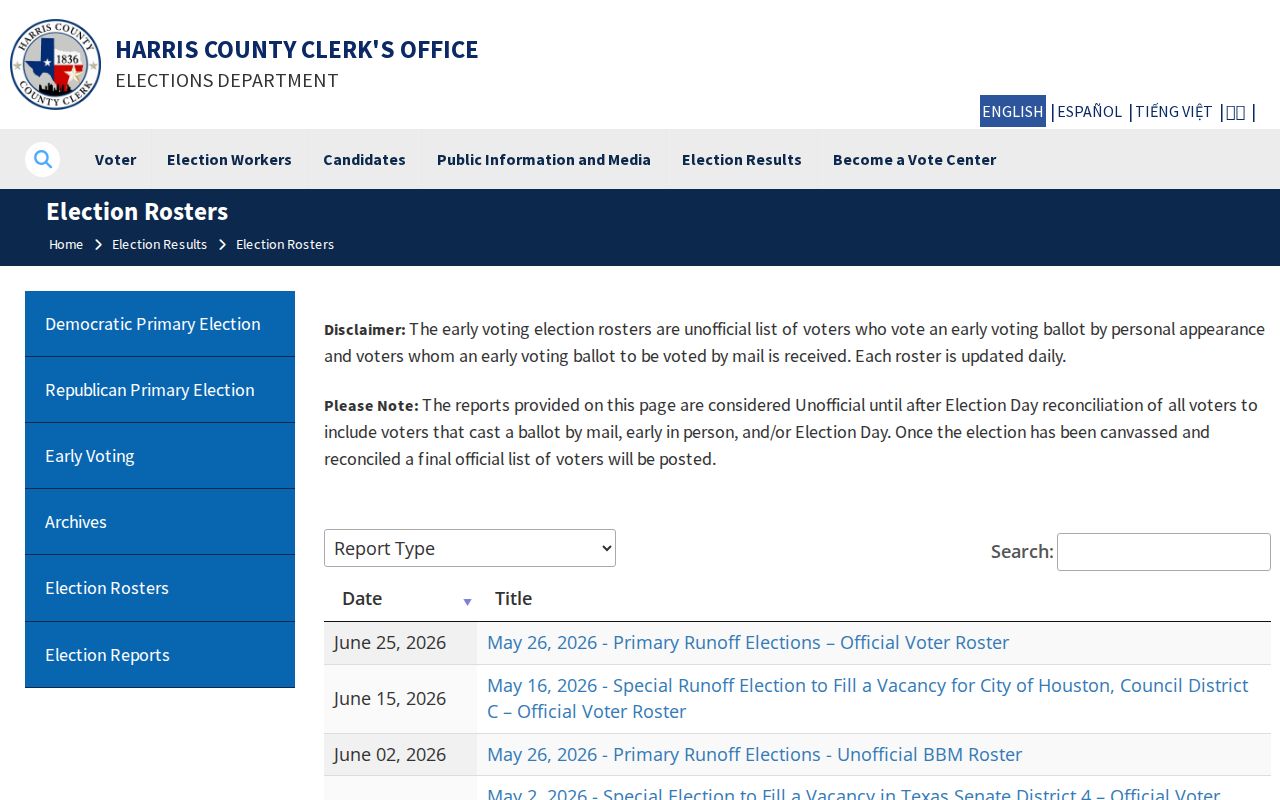
Compare a roster only with a lawful independent match key, such as a record date, precinct context, or another official document.
Deer Park Deed Index Trails
The Harris County Clerk Real Property search is the recorded-instrument source for Deer Park land. It accepts file number, film code, date range, grantor, grantee, trustee, subdivision or description, instrument type, and legal-description components such as lot and block. A deed trail begins with the HCAD account and legal description, then follows the newest grantee back to the prior grantor.
Online images are stated from November 1, 1960. Earlier work may require the Clerk’s historical warehouse, books, or microfilm. Free registration provides watermarked images; certified and non-certified copy choices have separate fees. A property card is a lead, while the recorded instrument supplies the documented transfer details.
The Harris County Clerk real-property index is the essential recorded link in a Deer Park residents directory property trail.
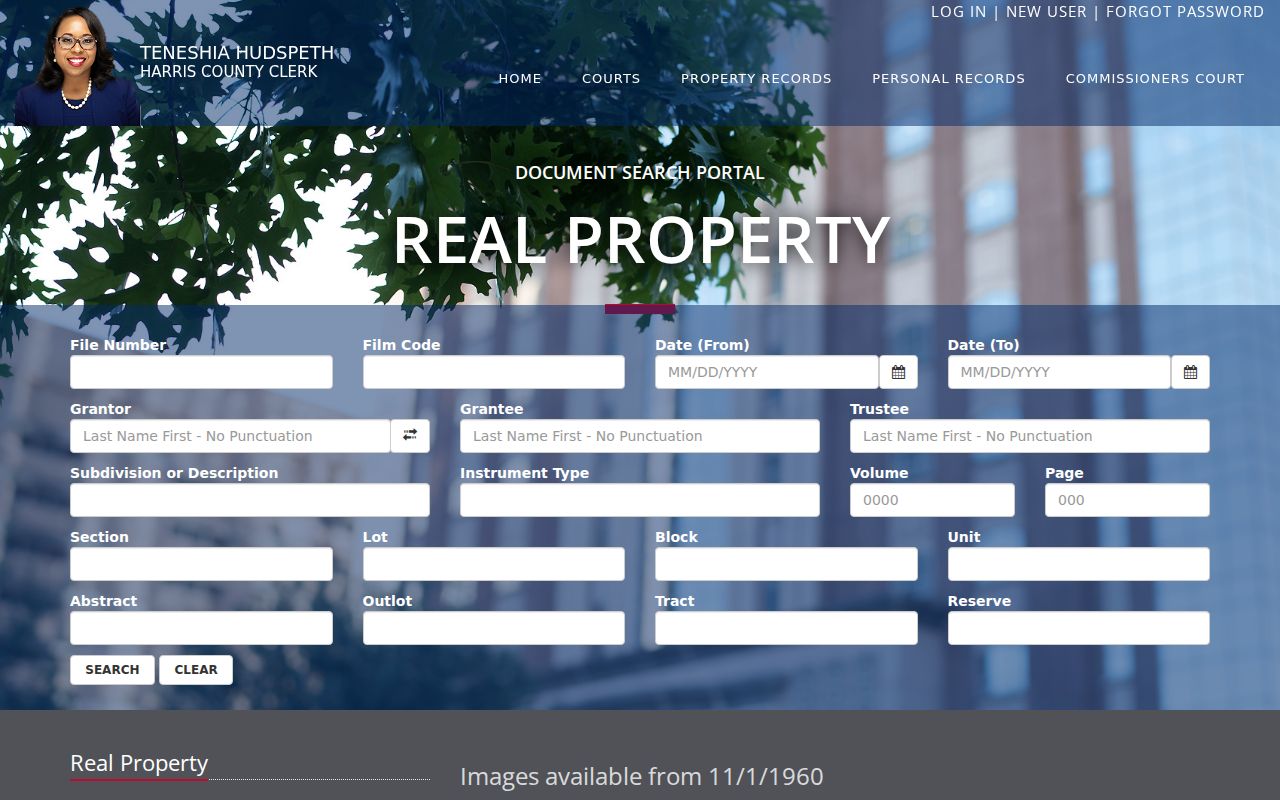
Use the original street wording and legal description from each instrument rather than forcing older material into a modern address format.
Deer Park Records Request Routes
A missing online result does not always end the search. The city’s written request process directs Police, Municipal Court, and other department records to different routes and allows request tracking with a security key. Describe an existing item, such as a permit log, incident report, address-specific correspondence, or index entry. Give a date range, address, case number, or other identifier.
The Public Information Act uses a prompt-production standard, subject to exceptions. The city says electronic delivery can be free and notes a $0.10-per-page rate for more than 25 standard pages; estimates over $40 require an itemized estimate. Never ask an agency to compile a new list of everyone at an address, because the Act does not require that new compilation.
Note: City staff direct birth, death, marriage, and divorce questions to the county or state custodian rather than the city request system.
Deer Park Vital Record Leads
For a family-history question, Texas DSHS and the Harris County Clerk are the relevant routes, not City Hall. DSHS states that birth records become public after 75 years and death records after 25 years. Recent certificates have identity and relationship requirements. State marriage indexes begin in 1966 and divorce indexes in 1968, but an index is not certified proof.
The state’s forms distinguish a certificate, verification, index request, and record type. A Harris County marriage license search concerns licenses issued by Harris County, so a Deer Park event may require a different issuing county. Dates, names, and the proper custodian matter more than a broad name search.
Texas DSHS vital-record forms show the current application routes and help separate a verification from a certified record.
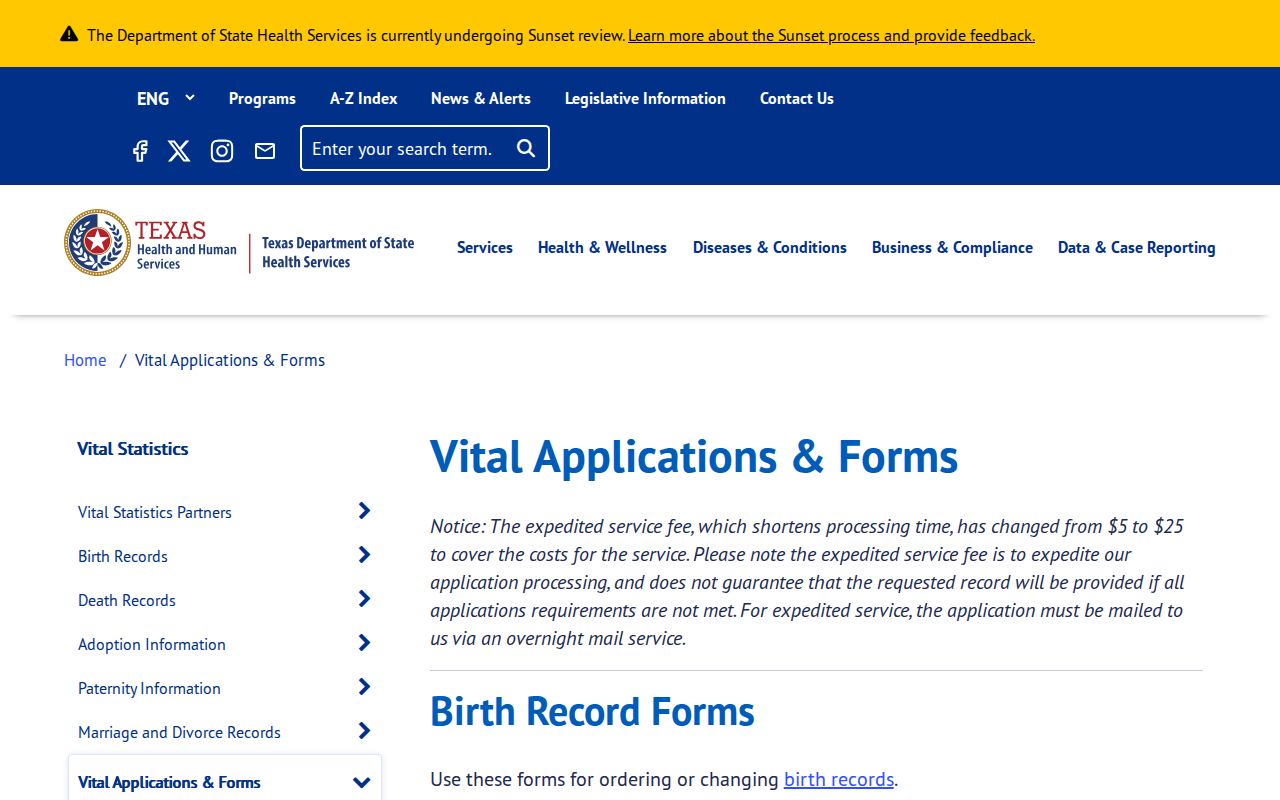
These forms can corroborate a dated event when eligibility rules allow access, but they are not a general current-resident search.
Historical Deer Park Residents Directories
Historical Deer Park residents directory research relies on a shelf of partial sources rather than a confirmed complete local run. A 1967 Baytown directory that includes Highlands has a Deer Park High School household entry, and the University of North Texas provides its scanned page. The Texas State Library and Archives Commission lists Houston directories as a regional fallback. Neither source should be treated as a complete Deer Park household census.
Deer Park Library provides access routes for Newspapers.com, the Deer Park Broadcaster through NewsBank for 2007 to 2020, Texas Digital Sanborn Maps, HeritageQuest, and in-library Ancestry Library Edition. The Clayton and Deer Park Historical Society adds albums and yearbooks. For the full collection trail, use the Deer Park city directory page.
The 1967 regional directory page at UNT is a dated, local example of the fields a historical directory can hold.
Deer Park Custody Record Limits
Custody and registry sources are separate from a Deer Park residents directory. Harris County jail information covers in-custody inquiries. Texas Department of Criminal Justice uses name, SID, or TDCJ number for state-custody searches. A record can show a status or facility, but it is not a lifetime address history and must not be matched to a local person by name alone.
Match a sensitive result only with lawful, independent details such as date of birth, SID, booking number, court record, or documented status. A booking is not a conviction, and a registry or custody entry must be read with its date and jurisdiction.
The TDCJ offender-search interface illustrates its separate name, SID, and number fields.
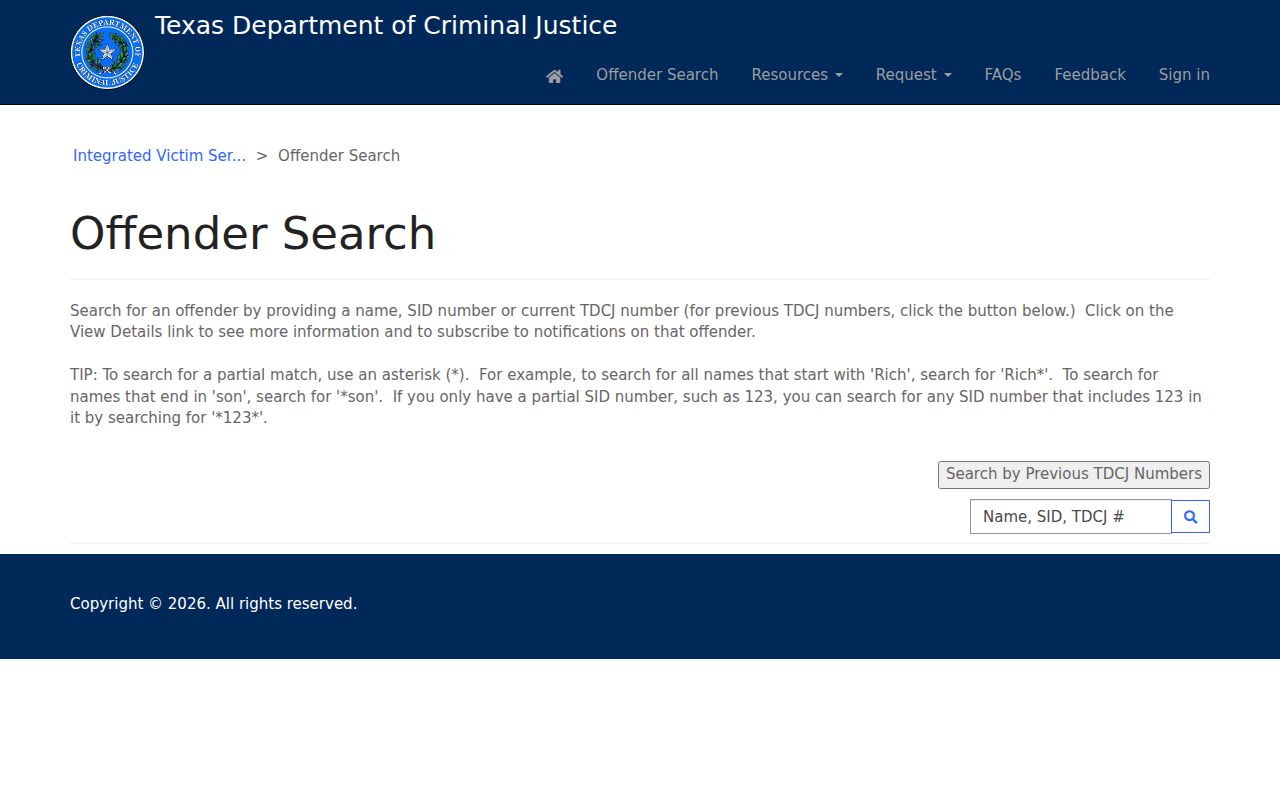
The result fields are a state-custody lead and should not be presented as proof of current Deer Park residence.
Deer Park Resident Record Boundaries
Public access has limits. Texas law can protect Social Security numbers, driver-license and identification numbers, protected voter addresses, recent vital records, juvenile material, sealed cases, and other confidential information. The Address Confidentiality Program offers a substitute-address route for eligible survivors. A prior record should never be used to reconstruct a protected address.
Official records are generally stronger than commercial people-finder compilations because the custodian, record type, and date are visible. They still require careful matching and may contain delays or redactions. Keep a source URL, access date, record date, and the match reason with each result.
| Official source | Strength | Limit to preserve |
|---|---|---|
| Custodian index | Named record type and date | May omit restricted or older material |
| Recorded image | Document context and legal description | May be redacted or require a copy route |
| Commercial compilation | Possible starting lead | Role, date, and accuracy need independent confirmation |
Note: A person’s appearance in a record is not proof of a current address, household membership, or wrongdoing.